
Why Monsoon Season Might Be the Best Time to Visit Arizona Wine Country
When most people think about Arizona in the summer, they picture 110-degree pavement, saguaros, and trying not to melt between the car and the grocery store.
Then there's Sonoita.
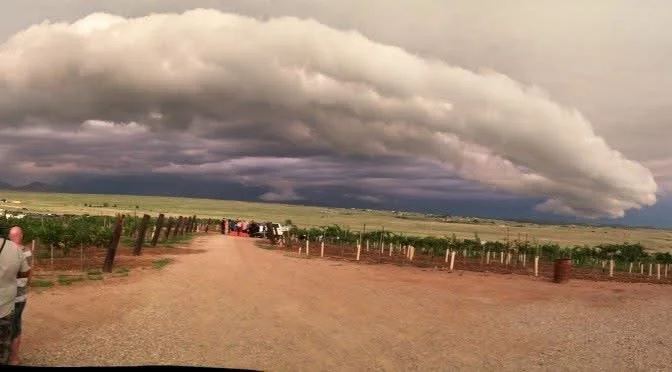
Every July and August, something pretty incredible happens down here. The skies get dramatic. The hills turn green almost overnight. Wildflowers start popping up. The temperature drops just enough to make sitting on a patio with a glass of wine actually enjoyable. Thunderheads build over the mountains, lightning dances across the horizon, and the sunsets? They don't even look real.
If you've never experienced monsoon season in Arizona wine country, you're missing one of the state's best-kept secrets.
The Science Behind the Magic
Arizona's monsoon isn't just a rainy season. It's a complete shift in weather patterns.
During the summer, winds begin pulling moisture north from the Gulf of California and eastern Pacific. As that humid air collides with the cooler, higher elevations of Sonoita and the surrounding Sky Islands, massive afternoon thunderstorms begin to form.
Our vineyards sit around 5,000 feet above sea level, which makes a huge difference. Temperatures here are often 10 to 20 degrees cooler than Tucson or Phoenix. That elevation, combined with afternoon cloud cover and rainfall, creates an environment that surprises just about everyone who visits.
People drive down expecting desert.
They find rolling green grasslands instead.
Monsoon Is Good for the Vines, Too
Rain isn't just pretty. It matters.
The vines have spent months sending their roots deep into the soil searching for water. Those deep roots are one of the reasons Arizona wines have such concentrated flavors and distinct character.
When the monsoons arrive, they provide a welcome drink at one of the most important times of the growing season.
The cooler temperatures slow stress on the vines, the moisture replenishes the soil, and healthy canopies continue supporting the grapes as they move toward ripening.
It's a balancing act. Too much rain can create challenges, which is why vineyard managers spend this time carefully managing airflow through the canopy, watching for disease pressure, and making adjustments almost daily.
Viticulture isn't just farming.
It's reading the weather, understanding the vines, and making hundreds of tiny decisions that eventually become the wine in your glass.
Every Storm Tells a Different Story
One of my favorite things about monsoon season is that no two afternoons are ever the same.
Some days the clouds roll in and cool everything down before disappearing.
Other days you'll watch towering thunderheads build over the mountains while sipping a glass of rosé on the patio.
Sometimes you'll catch that unmistakable smell of rain on desert soil before the first drop even falls.
And if you're lucky, you'll see one of those Arizona rainbows that stretches across the entire valley.
It's nature's version of dinner theater.
The Secret Season Nobody Talks About
People flock to Arizona in the winter.
Locals know the real surprise is summer in wine country.
The roads are quieter. The scenery is greener than most people realize Arizona can be. The storms are unforgettable, and the vineyards are alive with activity as harvest gets closer every day.
There's an energy here during monsoon season that's impossible to explain until you've experienced it yourself.
Come See It Before Everyone Else Figures It Out
The funny thing about Arizona monsoons is that they never photograph quite as beautifully as they feel in person.
The cool breeze right before a storm.
The smell of wet creosote drifting across the vineyard.
Watching lightning flash over the mountains while you finish a glass of estate wine.
Those are the moments people remember.
So if your idea of an Arizona summer is hiding indoors with the air conditioning cranked up, let us surprise you.
Come spend an afternoon in Sonoita.
You just might leave wondering why nobody told you this is what Arizona summers are really like.