
Fall in Love with Sonoita This November
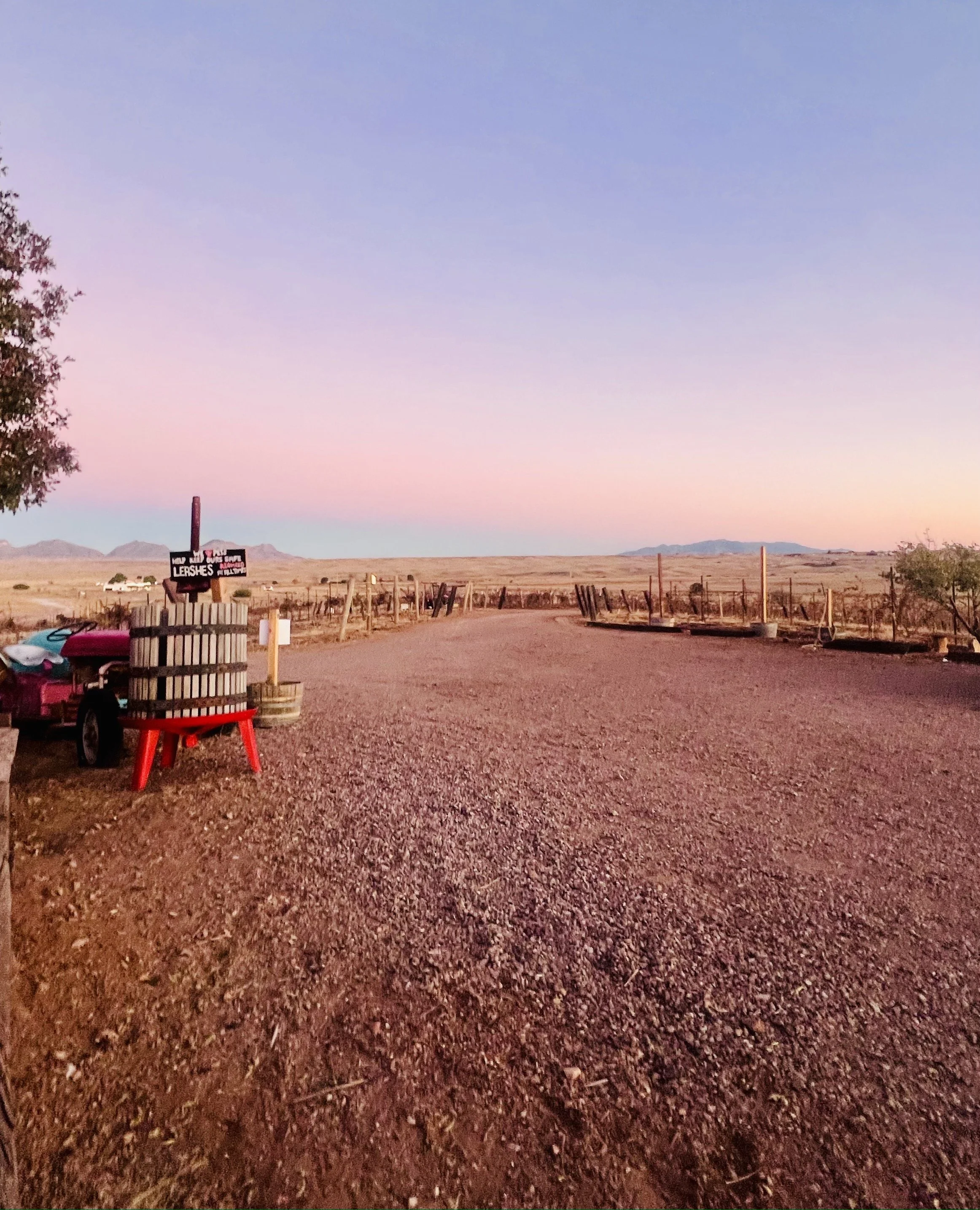
Have family coming to town for Thanksgiving? Bring them down to Sonoita. We love meeting everyone’s people: the cousins visiting from out of state, the sister who’s never been to wine country, and the “I only drink white” aunt who might just surprise himself.
November is a beautiful time to visit Arizona’s first wine-growing region. The air turns crisp, the light softens over the grasslands, and the vineyards begin their seasonal shift. It’s a good day to slow down, take in the views, and enjoy a glass with the people around your table. At Arizona Hops and Vines, we’re fond of saying we’re Not Your Average Winery. A visit here should feel relaxed, welcoming, and a little more fun than your average afternoon.
“Are the vines okay?”
It’s one of the questions we hear most from November visitors. The leaves are changing color and falling, and some rows look bare. Usually, that’s just the vines settling into their winter rest.
After the growing season, shorter days and cooler temperatures signal the grapevines to prepare for dormancy. Leaves may turn yellow, gold, or russet before dropping. The vines conserve energy through winter, then begin growing again when conditions warm. Later in the season, vineyard crews prune the dormant vines and prepare them for the year ahead.
The timing varies with the weather, elevation, and grape variety, so Sonoita’s vineyards don’t all change at once. Those quiet-looking rows are part of the natural rhythm of the vineyard, not a reason to panic.
Make it a family tradition
Thanksgiving brings people together, and we love when the whole crew comes along. There’s something special about introducing out-of-town family to Sonoita: the wide-open views, the local wines, and the easy pace that makes you want to stay a little longer.
Bring your questions about the vines, your stories from around the Thanksgiving table, and the people you’re happy to have in town. We’ll bring the wine and the conversation. That’s our kind of family gathering.
A perfect Black Friday day trip
After Thanksgiving, trade the shopping crowds for a scenic drive. Black Friday is a fine day to skip the doorbuster scramble, gather your visitors, and head south to Sonoita. Take in the grasslands, stop at a few tasting rooms, and let the afternoon unfold at its own pace.
Check out https://www.azhopsandvines.com/contact for tour companies that can pick up the whole fam! A light jacket is handy for the cooler morning and evening temperatures.
This November, bring your family, raise a glass, and fall in love with Sonoita Wine Country. The vines may be resting, but there’s plenty here to enjoy together, and we’d love to meet your family!
What the heck is a Vintage, anyway?
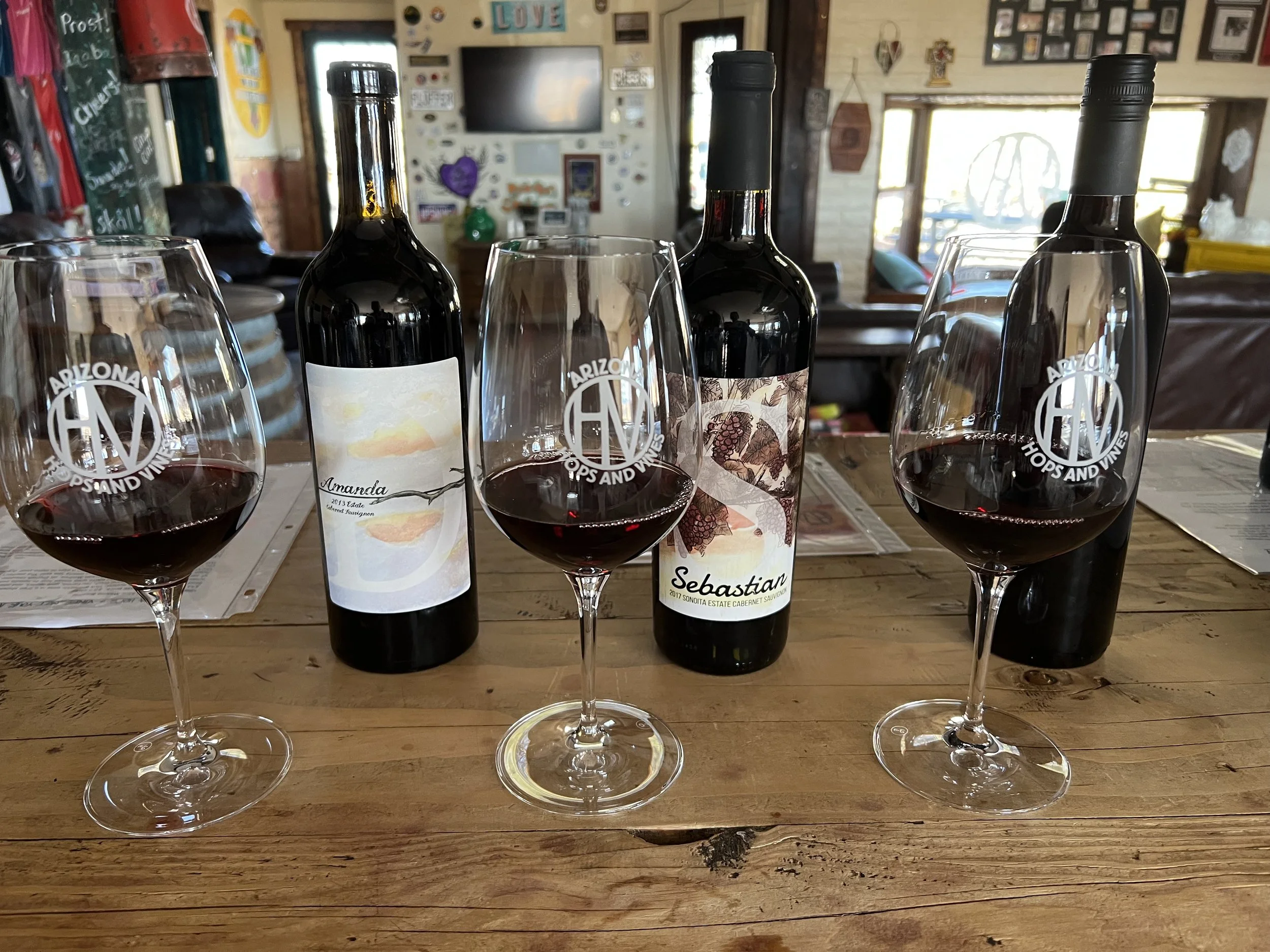
You see a year printed on a bottle of wine. 2022. 2023. 2025.
That year is the wine’s vintage, and at its simplest, it tells you the year the grapes were harvested.
But it also tells a story.
Wine starts as agriculture, and no two growing seasons are exactly alike. One year can be hot and dry. Another can bring a beautiful monsoon. There can be frost, hail, rain at exactly the right moment, or rain at exactly the wrong one.
All of those things affect the grapes growing in the vineyard and, ultimately, the wine in your glass.
That means the same grape grown in the same vineyard and made by the same winemaker won’t necessarily taste exactly the same every year.
And that’s not a flaw. That’s kind of the point.
A vintage is a snapshot of a particular vineyard in a particular year. Winemakers make decisions along the way, of course, but we’re still working with what Mother Nature handed us.
Taste It for Yourself: Bruce vs. Austin
We actually have a great example right here at Hops & Vines.
Bruce, our 2022 Estate Cabernet Sauvignon, is big, ripe and fruit-forward. Think dark, jammy fruit and a rounder, richer style.
Then there’s Austin, our 2023 Cabernet Sauvignon. It leans more savory and peppery, with less of that jammy fruit character you find in Bruce.
Same grape. Two different vintages. Two very different wines.
Why?
Part of the answer can be what happened in the vineyard that year. Heat, rainfall, monsoon timing, how quickly the grapes ripened and when they were harvested can all influence the balance between ripe fruit flavors, acidity, tannin and those more herbal or peppery characteristics.
There’s also another important piece: winemaking matters. Harvest decisions, fermentation, oak and aging can emphasize or soften what came out of the vineyard. Vintage matters, but it isn’t the only reason two wines taste different.
That’s what makes Bruce and Austin so much fun to taste side by side. Bruce shows off that lush, jammy side of Cabernet, while Austin heads in a spicier, more peppery direction.
Why Are We Pouring Older Vintages?
The year on the bottle isn’t the year the wine was bottled or released. It’s the year the grapes were picked.
Some wines are meant to be made, bottled and enjoyed relatively quickly. Others need time. They may spend months or years aging before they’re ready to make their way into the tasting room.
So while we’re harvesting grapes for one vintage, we might be bottling another and pouring something from several years earlier.
At any given moment, there can be several different years of wine happening around here at once.
Is an Older Vintage Better?
Nope.
Older doesn’t automatically mean better, and newer doesn’t automatically mean fresher or better.
Some wines are beautiful young. Some become more interesting with age. And some are simply different because the growing seasons were different.
That’s one of the things we love most about wine.
You aren’t just drinking Cabernet or Grenache or Montepulciano. You’re drinking that grape, from that place, in that year.
So next time you pick up a bottle, take a look at that little year on the label.
It may be four numbers, but there’s an entire growing season behind them.
Why Monsoon Season Might Be the Best Time to Visit Arizona Wine Country
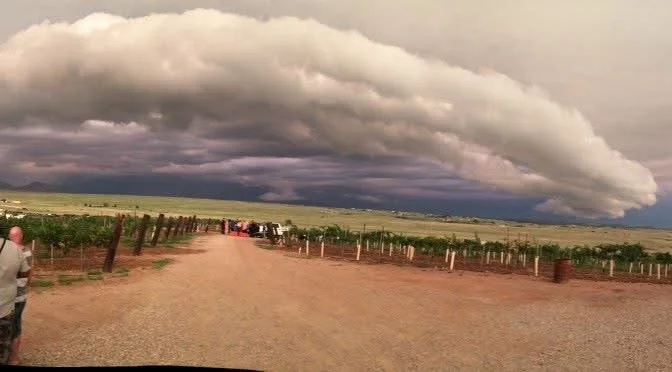
When most people think about Arizona in the summer, they picture 110-degree pavement, saguaros, and trying not to melt between the car and the grocery store.
Then there's Sonoita.
Every July and August, something pretty incredible happens down here. The skies get dramatic. The hills turn green almost overnight. Wildflowers start popping up. The temperature drops just enough to make sitting on a patio with a glass of wine actually enjoyable. Thunderheads build over the mountains, lightning dances across the horizon, and the sunsets? They don't even look real.
If you've never experienced monsoon season in Arizona wine country, you're missing one of the state's best-kept secrets.
The Science Behind the Magic
Arizona's monsoon isn't just a rainy season. It's a complete shift in weather patterns.
During the summer, winds begin pulling moisture north from the Gulf of California and eastern Pacific. As that humid air collides with the cooler, higher elevations of Sonoita and the surrounding Sky Islands, massive afternoon thunderstorms begin to form.
Our vineyards sit around 5,000 feet above sea level, which makes a huge difference. Temperatures here are often 10 to 20 degrees cooler than Tucson or Phoenix. That elevation, combined with afternoon cloud cover and rainfall, creates an environment that surprises just about everyone who visits.
People drive down expecting desert.
They find rolling green grasslands instead.
Monsoon Is Good for the Vines, Too
Rain isn't just pretty. It matters.
The vines have spent months sending their roots deep into the soil searching for water. Those deep roots are one of the reasons Arizona wines have such concentrated flavors and distinct character.
When the monsoons arrive, they provide a welcome drink at one of the most important times of the growing season.
The cooler temperatures slow stress on the vines, the moisture replenishes the soil, and healthy canopies continue supporting the grapes as they move toward ripening.
It's a balancing act. Too much rain can create challenges, which is why vineyard managers spend this time carefully managing airflow through the canopy, watching for disease pressure, and making adjustments almost daily.
Viticulture isn't just farming.
It's reading the weather, understanding the vines, and making hundreds of tiny decisions that eventually become the wine in your glass.
Every Storm Tells a Different Story
One of my favorite things about monsoon season is that no two afternoons are ever the same.
Some days the clouds roll in and cool everything down before disappearing.
Other days you'll watch towering thunderheads build over the mountains while sipping a glass of rosé on the patio.
Sometimes you'll catch that unmistakable smell of rain on desert soil before the first drop even falls.
And if you're lucky, you'll see one of those Arizona rainbows that stretches across the entire valley.
It's nature's version of dinner theater.
The Secret Season Nobody Talks About
People flock to Arizona in the winter.
Locals know the real surprise is summer in wine country.
The roads are quieter. The scenery is greener than most people realize Arizona can be. The storms are unforgettable, and the vineyards are alive with activity as harvest gets closer every day.
There's an energy here during monsoon season that's impossible to explain until you've experienced it yourself.
Come See It Before Everyone Else Figures It Out
The funny thing about Arizona monsoons is that they never photograph quite as beautifully as they feel in person.
The cool breeze right before a storm.
The smell of wet creosote drifting across the vineyard.
Watching lightning flash over the mountains while you finish a glass of estate wine.
Those are the moments people remember.
So if your idea of an Arizona summer is hiding indoors with the air conditioning cranked up, let us surprise you.
Come spend an afternoon in Sonoita.
You just might leave wondering why nobody told you this is what Arizona summers are really like.
Forget Napa

Malvasia
Why Sonoita is the next big thing:
If you’re still looking to California for the next exciting, boutique wine discovery, you’re looking in the wrong direction.
Tucked away just an hour southeast of Tucson, surrounded by the stunning Santa Rita and Huachuca mountains, lies a high-desert secret that is quickly becoming the darling of the wine world. Sonoita, Arizona, is no longer just a "hidden gem"—it has been officially named one of the "New Napa Valleys" by Wine Enthusiast.
With over 20 wineries crafting bold, unique, and award-winning bottles, Sonoita is rapidly evolving from a local curiosity into a premier destination for wine enthusiasts. Here is why this high-altitude valley is, without a doubt, the next big thing.
1. The 5,000-Foot Advantage: A Unique Terroir
Most people don’t associate Arizona with premium wine, but Sonoita isn't your average desert. Sitting at roughly 5,000 feet in elevation, the region enjoys a unique high-desert climate that sets it apart.
The "Diurnal Shift": Days are hot and sunny, allowing grapes to develop intense sugars, but nights are cool, sometimes 20-30 degrees colder. This dramatic swing preserves the grapes' natural acidity, creating a perfectly balanced wine.
Volcanic Soil: The area features ancient, volcanic, and gravelly loam soil that drains rapidly—forcing vines to struggle and develop deep roots, which results in more complex, nuanced flavors.
2. The "Napa Effect" in a Relaxed Setting
Unlike the crowded tasting rooms and expensive entry fees of Napa Valley, Sonoita offers an intimate, authentic experience. It’s a place where you can sit on a patio, enjoy a glass of wine, and often chat directly with the owner or winemaker.
3. Bold, Mediterranean-Style Varietals
Because of its climate and geography, Sonoita has become a sanctuary for grapes that thrive in Southern France and Spain. Forget about light, watery wines—Sonoita is known for its bold, expressive red blends.
Tempranillo & Grenache: These flourish here, producing earthy, fruit-forward wines.
Malvasia: A rising star in the region.
Rhône Blends: Syrah and Mourvèdre are absolutely thriving in the high-altitude soil.
4. Innovation and Sustainability
The winemakers in Sonoita are not just making wine; they are pioneers. Due to the challenges of the high-desert, these producers are forced to be more creative and sustainable.
5. It’s More Than Just a Drink—It’s an Experience
Sonoita is surrounded by rugged, breathtaking beauty—the "175 degrees of sky" that make it a perfect day trip from Tucson or a weekend escape from Phoenix.
Unmatched Scenery: Vineyards look out onto the Santa Rita Mountains, The Huachucas, The Whetstones, Canelo Hills, and the Patagonia Mountains, making for spectacular, unpolluted views of the stars, especially during the October meteor showers.
Activities: It’s not just drinking. You can explore the Patagonia Lake State Park, visit local cattle ranches, or attend the annual Great Crush Festival.
The Verdict: Visit Now Before Everyone Else Does
Sonoita is in the midst of a massive growth phase, with new tasting rooms and vineyards popping up constantly. Wine experience-driven visitor spending in Arizona has seen an astronomical 677% increase since 2011.
If you are looking for the next, undiscovered, high-quality wine region to fall in love with, look to Sonoita. Book a weekend trip, drive down Route 82, and taste the "new" Southwest for yourself.
Why Sonoita’s Dark Skies Are The Perfect Backdrop For Wine & Wonder

There’s something about Sonoita at night …no city lights, no distractions, just the vast desert sky stretching out above the vines. Out here, the stars don’t twinkle, they blaze.
No Light Pollution: With no city glow on the horizon, Sonoita offers some of the clearest skies in Arizona. That’s why it’s the perfect setting for our upcoming Stargazing in the Vineyard night. Dark Skies, No City Glow.
Far from Tucson and Phoenix, Sonoita’s skies are blissfully free of light pollution. That means no hazy skyglow, no washed-out stars — just the Milky Way in all its brilliance, arching from one horizon to the other.
High Desert Elevation
At nearly 5,000 feet, Sonoita sits above the dust and haze of the valley. The cooler, drier air makes the stars appear sharper and steadier, like someone polished the sky just for you.
Open Horizons
The rolling vineyards and grasslands open wide to the sky. With no tall buildings or forests blocking your view, you can see low-horizon events like moonrises, planetary pairings, and meteors that streak clear across the heavens.
The Meteor Shower: This October, the Orionid meteor shower will almost be at their peak. and you’ll have front-row seats from the middle of the vineyard. Bring a blanket and get comfy by the Fire, and watch as streaks of light race across the sky.
Every October, Earth drifts through the trail of dust left by Halley’s Comet, and the result is the Orionid meteor shower. At its peak, you can see up to 20 meteors an hour streaking across the sky, each one burning up as it enters our atmosphere. Out in Sonoita, with zero light pollution, the show is even brighter — like sparks flying across the Milky Way.
Wine + Stars: Relax with a glass of our favorite fall wines while you take it all in. It’s not just stargazing — it’s slowing down, reconnecting, and letting the magic of the night sink in.
Tickets to be part of the magic and experiance this hand are available at:
https://www.azhopsandvines.com/shop/p/stargazing-in-the-vineyard
5 Reasons to Visit Sonoita Wine Country this September

harvest
Discover why September is the perfect time to visit Sonoita wine country. From the Great Crush Festival to harvest season wines, here are 5 reasons to plan your trip.
1. Harvest Season in Full Swing
September is when the vineyards come alive. Grapes are picked, bins are filled, and the energy of harvest runs through Sonoita wine country.
2. The Great Crush Festival
On Saturday, September 13, 2025, Arizona Hops and Vines hosts the Great Crush Festival, the state’s most immersive harvest tradition. Guests stomp grapes, sip wines, and celebrate the season with food, music, and vineyard views. Admission is free and all are welcome.
3. Perfect Weather for Wine Tasting
Sonoita’s September weather is ideal for sipping outside. Cooler temperatures and crisp skies make it the perfect escape from Tucson and Phoenix.
4. Unique Arizona Wines
From bold reds to crisp whites, Sonoita offers some of the most distinctive wines in the Southwest. September tastings feature the freshest releases, straight from harvest.
5. A True Arizona Experience
Sonoita isn’t just wine — it’s rolling grasslands, sweeping skies, and a tight-knit community of winemakers. A September visit offers both beauty and authenticity.
Plan Your Trip
Great Crush Festival: Saturday, September 13, 2025 | 11 AM–5 PM | Arizona Hops and Vines
Location: Sonoita, AZ — just an hour from Tucson and under three hours from Phoenix