
What the heck is a Vintage, anyway?
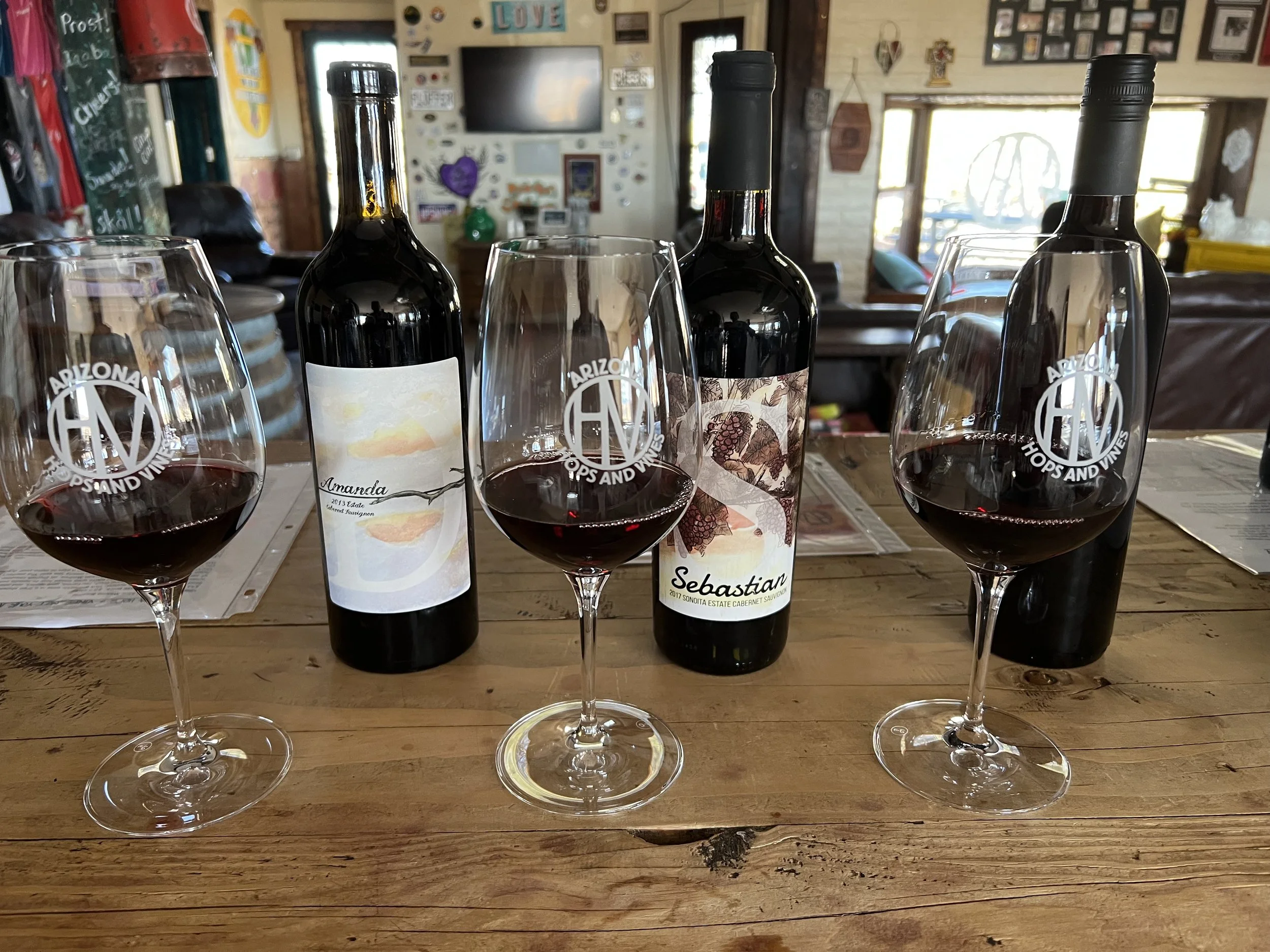
You see a year printed on a bottle of wine. 2022. 2023. 2025.
That year is the wine’s vintage, and at its simplest, it tells you the year the grapes were harvested.
But it also tells a story.
Wine starts as agriculture, and no two growing seasons are exactly alike. One year can be hot and dry. Another can bring a beautiful monsoon. There can be frost, hail, rain at exactly the right moment, or rain at exactly the wrong one.
All of those things affect the grapes growing in the vineyard and, ultimately, the wine in your glass.
That means the same grape grown in the same vineyard and made by the same winemaker won’t necessarily taste exactly the same every year.
And that’s not a flaw. That’s kind of the point.
A vintage is a snapshot of a particular vineyard in a particular year. Winemakers make decisions along the way, of course, but we’re still working with what Mother Nature handed us.
Taste It for Yourself: Bruce vs. Austin
We actually have a great example right here at Hops & Vines.
Bruce, our 2022 Estate Cabernet Sauvignon, is big, ripe and fruit-forward. Think dark, jammy fruit and a rounder, richer style.
Then there’s Austin, our 2023 Cabernet Sauvignon. It leans more savory and peppery, with less of that jammy fruit character you find in Bruce.
Same grape. Two different vintages. Two very different wines.
Why?
Part of the answer can be what happened in the vineyard that year. Heat, rainfall, monsoon timing, how quickly the grapes ripened and when they were harvested can all influence the balance between ripe fruit flavors, acidity, tannin and those more herbal or peppery characteristics.
There’s also another important piece: winemaking matters. Harvest decisions, fermentation, oak and aging can emphasize or soften what came out of the vineyard. Vintage matters, but it isn’t the only reason two wines taste different.
That’s what makes Bruce and Austin so much fun to taste side by side. Bruce shows off that lush, jammy side of Cabernet, while Austin heads in a spicier, more peppery direction.
Why Are We Pouring Older Vintages?
The year on the bottle isn’t the year the wine was bottled or released. It’s the year the grapes were picked.
Some wines are meant to be made, bottled and enjoyed relatively quickly. Others need time. They may spend months or years aging before they’re ready to make their way into the tasting room.
So while we’re harvesting grapes for one vintage, we might be bottling another and pouring something from several years earlier.
At any given moment, there can be several different years of wine happening around here at once.
Is an Older Vintage Better?
Nope.
Older doesn’t automatically mean better, and newer doesn’t automatically mean fresher or better.
Some wines are beautiful young. Some become more interesting with age. And some are simply different because the growing seasons were different.
That’s one of the things we love most about wine.
You aren’t just drinking Cabernet or Grenache or Montepulciano. You’re drinking that grape, from that place, in that year.
So next time you pick up a bottle, take a look at that little year on the label.
It may be four numbers, but there’s an entire growing season behind them.